Childhood Obesity in Urban Pakistan: A Growing Crisis in Plain Sight
Childhood obesity is becoming an increasingly visible health concern in urban Pakistan, but its long-term consequences can be easy to overlook. As lifestyles in cities like Karachi, Lahore and Islamabad become more sedentary and diets change, more children may be exposed to health risks linked to excess weight. While malnutrition and stunting remain serious concerns, childhood obesity represents another growing challenge that deserves attention.
What Is Childhood Obesity?
Childhood obesity refers to a child carrying excess body fat to a degree that affects their health. It is typically measured using BMI-for-age percentiles rather than the fixed BMI cutoffs used for adults. A child is generally classified as overweight above the 85th percentile for their age and sex and obese above the 95th percentile.
Unlike a passing growth phase, obesity in children tends to track into adulthood. A child who is obese at age ten carries a significantly higher likelihood of remaining obese as an adult, along with the metabolic and cardiovascular risks that come with it.
The Scale of the Crisis in Urban Pakistan
The childhood obesity statistics which Pakistan is producing today would have been unthinkable a generation ago. A nationwide study of school-aged children found that 66.9 percent were overweight and 5.8 percent were classified as obese, in a country long associated primarily with undernutrition.
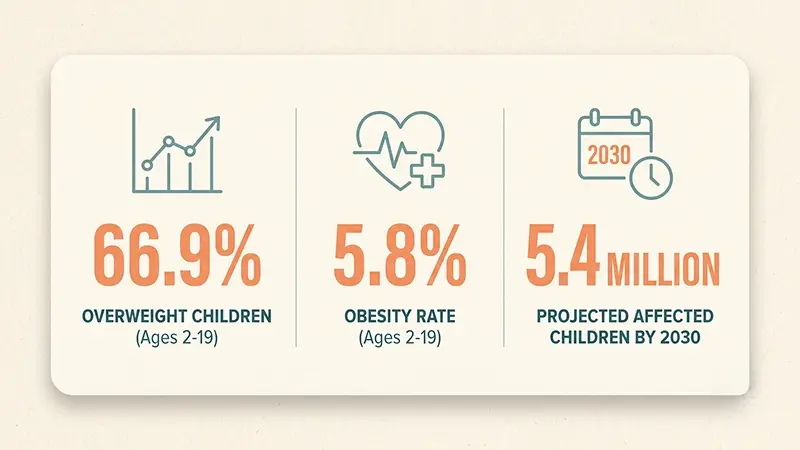
The World Obesity Federation projects that by 2030, 5.4 million Pakistani school-age children will be classified as obese. That trajectory places Pakistan among the countries facing the fastest-rising childhood obesity risk in the region. What makes this distinctly an urban story is where the risk concentrates.
Research has consistently found the sharpest increases among children in cities, particularly those from higher-income households with greater access to processed food, private transport and screen-based entertainment. Obesity in urban children is climbing fastest precisely where families believe their children are living healthier lives.
Why Urban Pakistan Is Especially at Risk
Understanding the childhood obesity causes behind this crisis means looking at several forces converging in Pakistan's cities at once.
The Rise of Processed and Fast Food
Processed food consumption has changed the texture of urban childhood entirely. Packaged snacks, sugary drinks and fast food are now deeply embedded in daily routines, from school canteens to birthday celebrations. These foods are calorie-dense, heavily marketed to children, and far more accessible in cities than in rural areas.
Screen Time and Sedentary Routines
Screen time has replaced much of the physical activity that previous generations took for granted. Urban children with higher socioeconomic status spend substantially more hours on phones, tablets and television and far less time in unstructured outdoor play. This sedentary lifestyle is now one of the strongest predictors of weight gain among Pakistani children.
Affluence and Convenience
Ironically, rising household income in urban Pakistan has often translated into less movement rather than more. Private transport replaces walking, domestic help reduces household chores, and shrinking outdoor space in dense city neighborhoods leaves fewer places for children to play.
Parental Misconceptions Around Weight
In many Pakistani households, a chubby child is still seen as a healthy, well-fed child. This framing can delay parents from recognizing early weight gain as a health concern rather than a sign of good care. By the time concern sets in, the pattern is already established.
Recognizing the Warning Signs
Childhood obesity often develops gradually, which is part of why it goes unaddressed for so long.
Signs worth paying attention to include:
- Rapid weight gain that outpaces height growth
- Visible breathlessness during normal play or light activity
- Difficulty keeping up physically with peers
- Early signs of stretch marks or skin changes around the neck (acanthosis nigricans)
- Snoring or disrupted sleep, sometimes linked to sleep apnea
- Withdrawal from physical activities or sports due to self-consciousness
None of these signs alone confirms obesity, but together they warrant a conversation with a pediatrician rather than a wait-and-see approach.
Why Childhood Obesity Is More Than a Weight Issue
Excess weight in childhood carries consequences that extend well beyond appearance:
- A sharply elevated risk of type 2 diabetes in children, a condition once seen almost exclusively in adults
- Higher risk of high blood pressure and early cardiovascular strain
- Joint pain and orthopedic problems from excess weight on developing bones
- Lower self-esteem, anxiety and social withdrawal linked to weight-based teasing
- A strong likelihood of carrying obesity and its associated diseases, into adulthood
When overweight children in Pakistan's cities are growing into adults, they carry these risks with them. That is what makes early intervention so critical.
Childhood Obesity Prevention and Management
Addressing this crisis works best as a household-wide shift, not a diet imposed on one child.
Balanced Nutrition, Not Restrictive Dieting
Pediatricians generally advise against strict dieting for growing children. Instead, gradually shifting toward home-cooked meals, more vegetables and fruit and fewer sugary drinks and packaged snacks tend to produce healthier, more sustainable results. Weight management for children should focus on building habits, not counting calories.
Encouraging Daily Physical Activity
Physical activity for kids is equally important. At least 60 minutes of active play or structured movement a day is recommended. In dense urban settings, this may mean deliberately scheduling park visits, sports or active family time rather than relying on incidental activity.
Limiting Screen Time
Setting consistent daily limits on recreational screen time and replacing some of it with outdoor alternatives, is one of the most effective household-level changes available to urban families.
Family-Based Behavior Change
Children are far more likely to adopt healthier habits when the whole household changes together rather than a child being singled out. Framing changes around family health, not individual blame, tends to work better and avoids the emotional harm of diet-focused pressure on a child.
How SHINE Humanity Addresses Pakistan's Nutrition Transition
Pakistan is living through what public health researchers call a double burden of malnutrition, where undernutrition and rising obesity exist side by side, sometimes within the same community or even the same household. Addressing one without acknowledging the other leaves half the problem untouched.
SHINE Humanity's Sehat Ghar Nutrition Centers and community outreach programs build nutrition literacy at the household level, helping families understand balanced diets rather than simply reacting to visible malnutrition or unexplained weight gain in children.
Through its 18 free primary healthcare clinics across Sindh, SHINE's Diabetes, Hypertension and Hyperlipidemia Program plays a preventive role by screening families early rather than waiting for complications.
With digitized medical records across its clinics and a growing telemedicine initiative connecting patients with physicians remotely, SHINE is building the kind of early-detection infrastructure that Pakistan's nutrition transition demands.
Challenges That Still Need to Be Addressed
Despite growing recognition of the problem in medical circles, several barriers continue to slow progress:
- Childhood obesity is still widely dismissed as a cosmetic issue rather than a medical one
- Schools rarely screen for early weight-related risk factors
- Food marketing aimed at children remains largely unregulated
- Urban infrastructure offers limited safe, accessible space for children to be physically active
- Public health messaging in Pakistan still centers overwhelmingly on undernutrition, leaving rising obesity comparatively unaddressed
Closing these gaps will require the same combination of awareness, early screening and household-level education that has helped shift other preventable health crises in the country.
Conclusion
Left unaddressed, childhood obesity in urban Pakistan can lead to diabetes, heart disease and a lifetime of preventable illness beginning long before adulthood. This is not about appearance. It is a serious medical concern that requires urgent action through healthier nutrition, early screening, and timely support.
Support SHINE Humanity's mission to help build healthier futures for children across Pakistan.
Frequently Asked Questions
1. How common is childhood obesity in Pakistan?
National studies indicate that a significant percentage of school-aged children now fall into overweight or obese categories, with projections showing millions more at risk by 2030.
2. Why is childhood obesity rising specifically in urban areas?
Urban children, particularly from higher-income households, have greater access to processed food, private transport and screen-based entertainment, along with less unstructured outdoor play than rural children.
3. What health risks does childhood obesity carry?
Excess weight in childhood raises the risk of type 2 diabetes, high blood pressure, joint problems and low self-esteem, and strongly predicts obesity continuing into adulthood.
4. How can parents help an overweight child?
Pediatricians generally recommend gradual, family-wide changes such as more home-cooked meals, daily physical activity and limited screen time, rather than restrictive dieting focused on the child alone.
5. How much physical activity do children need?
Children are generally recommended to get at least 60 minutes of active play or structured physical activity every day.
6. Is childhood obesity only a problem in wealthier families?
No, but studies in Pakistan have found urban children from higher socioeconomic households face significantly greater risk, largely due to lifestyle and dietary differences that promote weight gain.