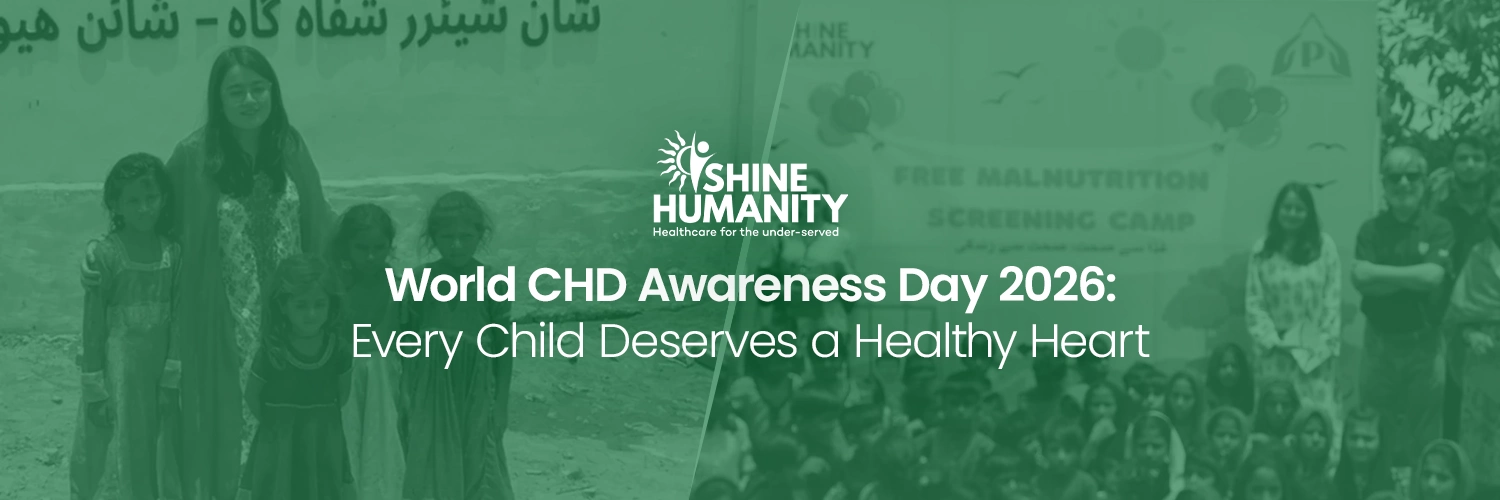
World CHD Awareness Day: Every Child Deserves a Healthy Heart
Congenital heart disease awareness begins with one simple truth: some children are born fighting battles we cannot see.
On World CHD Awareness Day, observed every year on February 14, we recognize one of the most common birth conditions worldwide, congenital heart disease (CHD). Globally, CHD affects nearly 1 in every 100 newborns, according to the Centers for Disease Control and Prevention (CDC), making it the most common type of birth defect. Yet despite this prevalence, awareness remains limited, especially in underserved communities.
Understanding CHD is not only about medical knowledge. It is about protecting lives, strengthening families, and ensuring that every child has the chance to grow with a healthy heart.
What Is Congenital Heart Disease?
Congenital heart disease (CHD) is a structural problem in the heart that develops before birth. It affects how blood flows through the heart and the rest of the body.
These heart defects in newborns can range from small holes in the heart that may close naturally to complex structural abnormalities that require surgery. CHD is not a single disease but a group of conditions classified under pediatric heart conditions.
Some cases are detected during pregnancy. Others are diagnosed after birth or even later in childhood.
Why World CHD Awareness Day Matters
World CHD Awareness Day exists to encourage early detection, improve access to care, and promote education about congenital heart disease in children.
Awareness matters because:
Many cases go undiagnosed without proper screening
Early diagnosis of CHD significantly improves survival rates
Families need education and emotional support
Communities must advocate for pediatric cardiac care
In countries like Pakistan, limited access to specialized cardiac services can delay diagnosis and treatment. That delay can be life-threatening.
Raising awareness is not symbolic. It directly impacts survival and long-term outcomes.
Signs and Symptoms Parents Should Watch For
Not all congenital heart defects show obvious signs immediately. However, symptoms may include:
Rapid breathing or difficulty breathing
Poor feeding or slow weight gain
Bluish tint to lips or fingertips (cyanosis)
Excessive fatigue during play
Frequent respiratory infections
A heart murmur detected during checkups
If these symptoms appear, immediate medical evaluation is critical.
Early diagnosis can prevent complications and improve long-term child heart health.
What Causes CHD?
In many cases, the exact cause of CHD is unknown. However, research suggests that congenital heart defects may result from a combination of genetic and environmental factors.
Risk factors may include:
Family history of heart defects
Maternal diabetes or infections during pregnancy
Smoking or alcohol use during pregnancy
Certain medications
Poor prenatal care
While not all CHDs are preventable, proper maternal health monitoring and prenatal checkups significantly reduce risks.
Can Congenital Heart Disease Be Detected Before Birth?
Many forms of CHD can be detected during pregnancy through advanced ultrasound and fetal echocardiography.
After birth, screening tools such as pulse oximetry help identify oxygen level abnormalities. In some cases, echocardiograms or other imaging tests confirm diagnosis.
The earlier the detection, the better the treatment outcomes.
This is why child healthcare awareness at the community level is essential.
Can Children With CHD Live Normal Lives?
With modern pediatric cardiac care, many children born with congenital heart disease grow into healthy, active adults. Some may require medication or surgery. Others may only need routine monitoring.
Survival rates have improved dramatically over the last few decades due to medical advancements and improved screening.
However, outcomes depend heavily on early diagnosis, timely treatment, and access to care and resources that are not equally available everywhere.
The Reality in Underserved Communities
In rural and underserved areas of Pakistan, early screening and specialized cardiac services are often inaccessible. Transportation barriers, financial constraints, and limited awareness delay timely diagnosis and intervention for congenital heart disease in children.
Many families may not recognize early symptoms of heart defects in newborns, and primary healthcare systems may lack structured referral pathways to pediatric cardiac specialists. As a result, manageable conditions can become life-threatening due to delayed care.
Strengthening early screening programs, improving referral systems, and increasing child healthcare awareness are essential steps in reducing preventable complications. Every child deserves timely access to diagnosis and treatment, regardless of geography or income.
How You Can Support Congenital Heart Disease Awareness
On World CHD Awareness Day, individual action matters.
You can:
Share verified information about congenital heart disease in children
Encourage expectant mothers to seek prenatal checkups
Advocate for newborn screening programs
Support healthcare NGOs working in underserved regions
Educate families about warning signs
Even a simple conversation can lead to early diagnosis for a child in need.
If you would like to explore global initiatives dedicated to congenital heart disease awareness, you can review trusted resources from established pediatric heart foundations.
Every Child Deserves a Healthy Start
Congenital heart disease is common. It is serious. But it is not hopeless.
Early detection, informed communities, and accessible healthcare dramatically improve outcomes for children born with heart defects. World CHD Awareness Day reminds us that awareness is the first step toward action.
At SHINE Humanity, strengthening healthcare access in underserved communities is part of ensuring that children receive timely medical attention, screenings, and referrals. Because every child, no matter where they are born, deserves the chance to live with a strong, healthy heart.
Support community healthcare and join hands with SHINE Humanity. Together, we can protect the next generation, one heartbeat at a time.