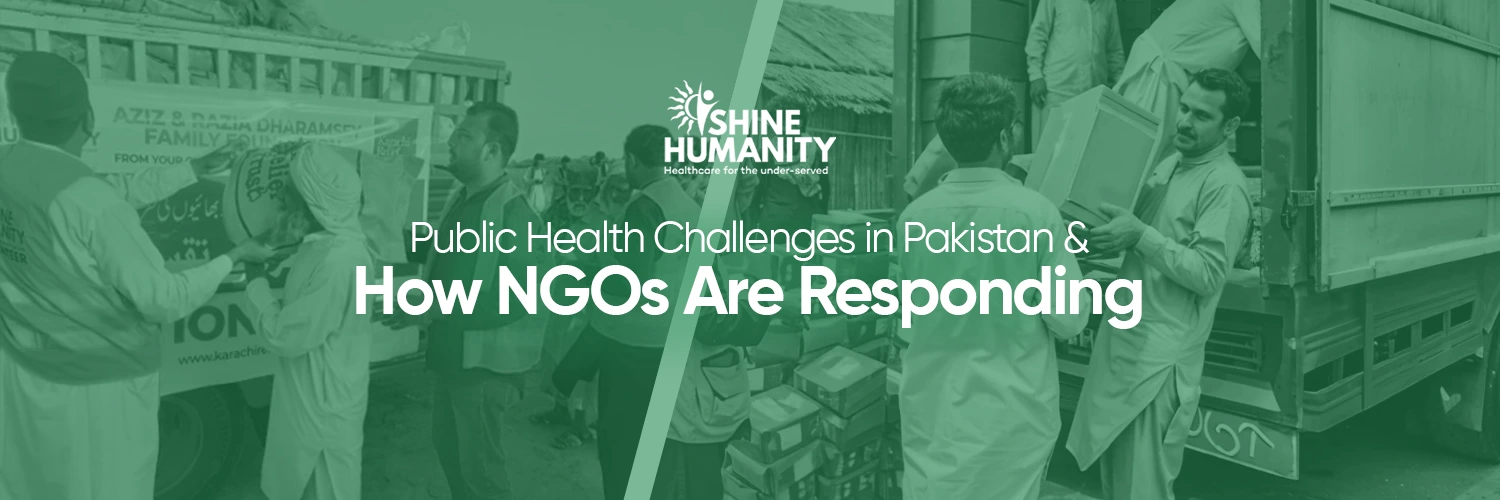
Public Health Challenges in Pakistan and How NGOs Are Responding
Millions of people in Pakistan face healthcare barriers that limit access to even basic medical care, reflecting the scale of public health challenges in Pakistan today. Limited funding, weak primary health infrastructure, and widespread inequality place communities at constant risk. For families living in remote or low-income areas, healthcare often depends on distance, cost, and luck.
Pakistan’s Public Health Overview
The following figures reflect Pakistan’s major public health concerns, compiled from national and international monitoring systems.
• Malaria: Over 500,000 confirmed cases in Khyber Pakhtunkhwa during 2023
• Dengue: Around 21,016 confirmed cases in 2023, rising to 28,427 cases in 2024
• Hepatitis B & C: An estimated 15 million people infected nationwide
• Tuberculosis: Nearly 611,000 cases recorded in 2022
• HIV: About 240,000 people living with HIV in 2023
• Diabetes: More than 33 million adults affected
• Maternal Mortality Ratio: Approximately 154 deaths per 100,000 live births
• Child Stunting: Roughly 40 percent of children under five are stunted
• Hypertension: About one in three adults affected
These realities make community-driven responses essential for improving health outcomes and reducing preventable illness.
Public Health Challenges in Pakistan
Pakistan is facing severe health gaps that continue to limit access to essential care for millions. These challenges stem due to multiple reasons, like:
1. Systemic Gaps That Shape Health Outcomes
Pakistan’s health system faces long standing shortages of resources, trained personnel, and functional facilities. Public health spending remains low, leaving many clinics without essential medicines or diagnostic tools. Workforce shortages add to the pressure. Many districts have only a few trained doctors or nurses, creating long wait times and limited follow-up care. Data collection systems also struggle. Without strong surveillance, outbreaks spread faster and remain undetected for longer. These gaps weaken prevention and delay treatment at every level.
2. Communicable Diseases That Persist
Infectious diseases remain one of Pakistan’s biggest burdens. Tuberculosis continues to affect large numbers of people, especially in crowded settlements where treatment interruptions are common. Hepatitis B and C spread quickly due to unsafe medical practices and limited screening. Dengue and malaria tend to surge during monsoon seasons. Poor waste management and stagnant water make vector control difficult in many areas. Waterborne diseases such as cholera and diarrhea rise sharply during floods, when families lose access to clean drinking water.
3. Maternal, Newborn, and Child Health Challenges
Maternal and child health outcomes remain among the weakest in the region. Many women give birth without skilled attendants, increasing the risk of complications. Antenatal care is often missed due to lack of transport, cost concerns, or low awareness. Malnutrition is widespread. High stunting and wasting rates in children reflect food insecurity and limited nutrition support. Vaccination gaps widen during emergencies, leaving children vulnerable to preventable diseases. These issues demonstrate the urgent need for stronger maternal and child health initiatives.
4. The Rising Burden of Non-communicable Diseases
Chronic illnesses are becoming more common. Diabetes, hypertension, heart disease, and some cancers are increasing in both urban and rural settings. Routine screening is rare, so many people discover their condition only after complications appear. Medication costs are high for low-income families, making long-term treatment difficult to maintain. Mental health needs are also rising, yet specialized facilities remain limited. Without stronger prevention programs, the impact of non-communicable diseases will continue to intensify.
5. Environmental and Climate Pressures
Climate change is amplifying health risks. Heatwaves increase the chance of heatstroke and worsen respiratory problems. Air pollution contributes to heart and lung diseases, especially in major cities. Floods destroy clinics, contaminate drinking water, and trigger outbreaks of diarrhea and skin infections. Displaced families struggle with temporary shelters, unsafe water, and interrupted chronic care. These conditions create an environment where illness spreads more quickly, and recovery becomes harder.
6. Access to Healthcare in Rural Pakistan
Many families in remote regions live hours away from the nearest clinic. Travel costs, lost wages, and lack of reliable transport make routine care difficult. Facilities in these areas often experience staff shortages, medicine stockouts, and low diagnostic capacity. Cultural barriers are also significant. Women may not be allowed to travel alone or may lack permission to seek treatment. These factors combine to delay care until conditions become severe.
Role of NGOs in Pakistan’s Healthcare
NGOs across Pakistan are stepping in to address gaps in the public system. Mobile clinics bring doctors, medicines, and diagnostic tools directly to remote villages. Community health programs train local workers to guide families on nutrition, maternal care, and disease prevention. Disease specific projects support hepatitis screening, TB case finding, polio vaccination, and malaria prevention. Nutrition centers monitor child growth and provide therapeutic foods. Telemedicine projects connect patients with distant specialists. These initiatives create practical, scalable solutions for underserved areas.
Challenges Faced by NGOs
NGOs working in public health often face operational and resource constraints. The table below outlines major challenges and the practical solutions to public health problems in developing countries.
| Challenge | Solution |
|---|---|
| Limited funding for long-term programs | Build multi-year donor commitments and develop strong public-private partnerships. |
| Shortage of trained staff in remote regions | Introduce rural service incentives, continuous training, and remote clinical mentoring. |
| Frequent shortages of essential medicines and diagnostics | Implement centralized procurement, supply chain monitoring, and predictable replenishment cycles. |
| Difficult terrain and transportation barriers | Deploy mobile health units, micro clinics, and telemedicine services. |
| Low level of trust in community health programs | Engage local health workers as community ambassadors and involve village committees. |
| Weak referral pathways for complex cases | Create formal linkages with district hospitals and establish clear escalation protocols. |
| Limited health literacy in underserved populations | Run continuous awareness campaigns, school programs, and culturally adapted materials. |
| Sustainability problems after the initial project funding ends | Design scalable, low-cost intervention models and build the capacity of local providers. |
Role of SHINE Humanity In Strengthening Public Health
Across Pakistan, many nonprofits are contributing to public health. SHINE Humanity is also playing a major role by serving communities that have limited access to care. Over the years, we have expanded free primary care clinics in remote areas and strengthened chronic disease management through our Diabetes and Hypertension Programs. We have also launched maternal and child health initiatives, including malnutrition treatment and community based midwife support. To improve continuity of care, we introduced digitized medical records and telemedicine services, allowing patients to receive follow-up care even when they live far from medical facilities. With your support, we can continue expanding these programs and reach even more families who rely on our services.
Let’s stand together to address the healthcare issues in Pakistan.
FAQs
1. What are the major public health challenges in Pakistan?
Pakistan faces infectious diseases, chronic illnesses, malnutrition, maternal health gaps, weak infrastructure, and limited care access in rural regions.
2. Why is healthcare so difficult to access in rural Pakistan?
Distance, transportation costs, low facility readiness, and cultural constraints make routine care difficult for rural families.
3. How do NGOs support healthcare in underserved areas?
NGOs provide mobile clinics, screening programs, maternal and child health services, chronic disease management, and emergency care.
4. Why are community health programs effective?
They rely on trusted local workers, improve awareness, support follow-up, and reduce barriers to clinic based care.
5. How can donors strengthen NGO’s healthcare initiatives?
Donors can help expand clinics, enable screening programs, support maternal health, and promote awareness campaigns.