Breastfeeding Awareness in Pakistan: Myths, Facts and Why It Saves Lives
A baby exclusively breastfed for the first six months is 14 times more likely to survive infancy than one who is not. Yet fewer than half of Pakistani mothers manage this. The reason is rarely a lack of will. Breastfeeding rates stay low because of myths passed through generations, discarded first feeds and well-meaning relatives who insist that formula is the safer choice.
It remains one of the most cost-free, evidence-backed interventions available to protect infant health, yet Pakistan continues to fall short of global targets, at a cost measured in thousands of preventable child deaths every year.
Why Breastfeeding Matters
Breast milk is often described as a baby's first vaccine and the description is not an exaggeration. It delivers antibodies, necessary nutrients and immune-protective compounds in the exact proportions a growing infant needs. It adjusts its composition over weeks and months as the baby grows, something no manufactured substitute can replicate. These breast milk benefits extend far beyond basic nutrition. Breast milk protects against respiratory infections, diarrhea and ear infections during a period when a baby's own immune system is still developing.
For mothers, the breastfeeding benefits are equally well-documented. Breastfeeding helps the uterus contract after delivery, supports postpartum weight regulation and is linked to a lower long-term risk of breast and ovarian cancer. These outcomes are backed by decades of clinical research, making breastfeeding one of the most cost-free, evidence-backed health interventions available to any family.
The Scale of the Gap in Pakistan
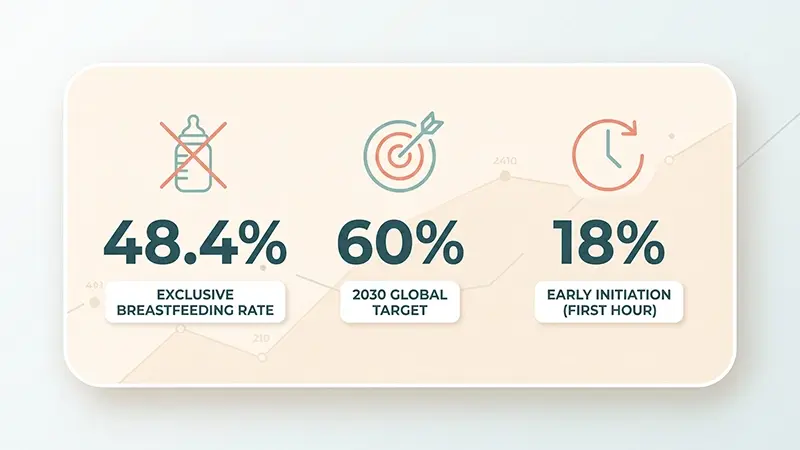
According to WHO breastfeeding guidelines, infants should receive nothing but breast milk for the first six months of life. Pakistan falls well short of this standard. Only 48.4 percent of infants under six months receive exclusive breastfeeding, against a global target of 60 percent set for 2030. Early initiation, meaning breastfeeding within the first hour of birth, sits at just 18 percent nationally.
These numbers carry real consequences. Low breastfeeding rates are linked to more than 33,700 child deaths, 6.6 million cases of childhood diarrhea and 2.7 million lost school years annually. Families also spend over 888 million dollars each year on breastmilk substitutes. That money buys a product that offers no equivalent nutritional or immune protection, in a country where many of those same families struggle to meet basic healthcare costs.
Common Breastfeeding Myths in Pakistan
Much of the gap between what mothers intend and what actually happens comes down to breastfeeding myths in Pakistan that have circulated within families for generations.

Myth: Colostrum is dirty or harmful
Fact: Colostrum, the thick yellowish milk produced in the first few days after birth, is the most concentrated source of antibodies a newborn will ever receive. Discarding it, a practice still common in some households, removes the baby's first and most powerful layer of immune defense at the most vulnerable stage of life.
Myth: Formula is just as good as breast milk
Fact: When families weigh formula feeding vs breastfeeding, the comparison is not close. Formula cannot replicate the antibodies, live cells or evolving nutritional composition of breast milk. In areas without reliable access to clean water, formula preparation also introduces contamination risk that breastfeeding avoids entirely.
Myth: Breastfeeding makes mothers weak
Fact: There is no medical evidence supporting this claim. Fatigue in early motherhood is far more often caused by sleep disruption and poor maternal nutrition, both of which are addressed through rest and a better diet rather than stopping breastfeeding.
Myth: Newborns need water or honey before breastfeeding begins
Fact: Prelacteal feeds are a longstanding cultural practice in parts of Pakistan, but they delay the baby's first exposure to colostrum and can introduce infection risk. Newborn feeding should begin with breast milk within the first hour of life, with nothing else given beforehand.
Barriers Rural and Working Women Face
Even mothers who are fully informed face obstacles that have nothing to do with personal choice.
Lack of Workplace Support
Studies among working Pakistani women found exclusive breastfeeding rates as low as 23 percent, compared to 77 percent among women who stay at home. Long hours, no paid breastfeeding breaks and no private space to feed or express milk all push mothers toward early weaning.
Cultural Pressure and Marketing
Infant feeding decisions in many Pakistani households are shaped as much by elders and extended family as by the mother herself. Myths frequently override medical advice, even when a mother is well informed. Aggressive marketing of breastmilk substitutes adds another layer, positioning formula as a modern or safer alternative in the eyes of families already uncertain.
Limited Access to Lactation Support
Skilled lactation counseling remains concentrated in urban centers. Rural mothers are often left to navigate early challenges like latching difficulties and low milk supply without professional guidance, increasing the likelihood of early weaning or a switch to formula.
Breastfeeding Tips for New Mothers
Practical guidance makes a measurable difference, especially when it reaches mothers in the first days after delivery.
- Start breastfeeding within the first hour of birth. Early skin-to-skin contact encourages the baby to latch and triggers milk production.
- Feed on demand rather than on a fixed schedule. Newborns typically need 8 to 12 feeds in a 24-hour period and frequent feeding helps establish a steady milk supply.
- Avoid introducing water, formula or prelacteal feeds unless a qualified health professional advises it. Exclusive breastfeeding in the first six months provides everything the baby needs.
- Pay close attention to maternal nutrition during breastfeeding. Mothers need roughly 500 additional calories per day along with adequate fluids, iron and calcium to sustain milk production without depleting their own health.
- Seek help early if latching feels painful or milk supply seems low. Lactation difficulties are common and almost always manageable with support from a trained midwife or counselor.
How SHINE Humanity Supports Breastfeeding and Infant Nutrition
Across rural Sindh, SHINE Humanity's community outreach teams and Sehat Ghar Nutrition Centers provide new mothers with practical, judgment-free guidance on early breastfeeding and infant nutrition. This work directly counters the myths that often take root in households long before a health worker reaches them.
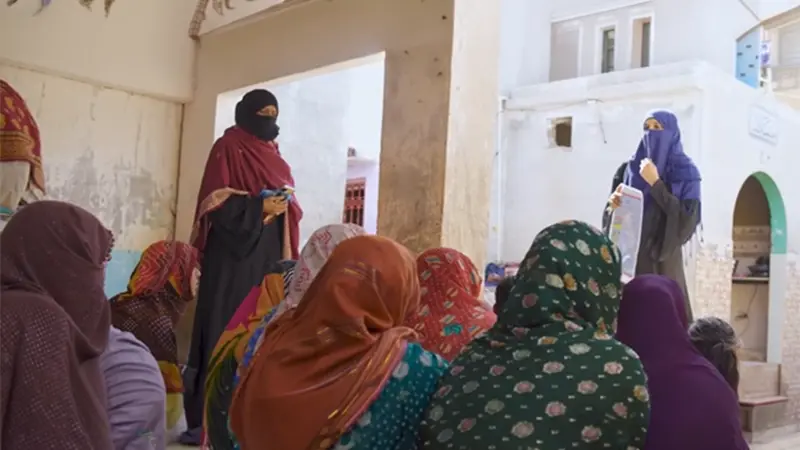
SHINE's community midwives, working within households across areas like Gharo, are frequently the first source of accurate newborn feeding guidance a new mother receives. In communities where the nearest primary healthcare facility may be hours away, this kind of accessible postpartum care can determine whether a baby receives the nutrition and immune protection that breastfeeding provides or misses it entirely because of a myth no one corrected in time.
Conclusion
Every year, thousands of preventable child deaths in Pakistan trace back to a gap that is not about resources or technology, but about information reaching the right people at the right time.
Breastfeeding awareness week campaigns and media coverage help, yet lasting change depends on trusted voices inside communities delivering accurate guidance where families actually make their decisions. The cost of inaction, measured in lives and lost futures, is simply too high to accept.
Support SHINE Humanity's mission to bring life-saving maternal and infant health guidance to communities across rural Sindh that need it most.
Frequently Asked Questions
1. When should complementary foods be introduced alongside breast milk?
WHO recommends introducing complementary foods at six months of age while continuing breastfeeding up to two years or beyond.
2. Can a mother breastfeed if she is malnourished?
Yes, a malnourished mother can still produce breast milk, though improving her nutrition will benefit both her health and her milk quality.
3. How can family members support a breastfeeding mother?
Family members can help by ensuring the mother gets enough rest, adequate meals and encouragement to follow medical guidance rather than household myths.
4. Is it safe to breastfeed when the mother is ill?
In most cases yes, because breast milk continues to pass protective antibodies to the baby, though a doctor should be consulted for specific illnesses or medications.
5. What should a mother do if her baby is not latching properly?
She should seek help from a trained midwife or lactation counselor as early as possible, since most latching difficulties can be resolved with proper positioning and support.
6. How long should a mother continue breastfeeding?
WHO recommends continued breastfeeding alongside complementary foods until the child is at least two years old.